• The things you find backstage…

    Theatres are curious places, magician’s trick-boxes where the golden memories of dramatic triumphs linger like nostalgic ghosts, and where the unexplainable, the fantastic, the tragic, the comic and the absurd are routine occurrences on and off the stage. Murders, mayhem, political intrigue, lucrative business, secret assignations, and of course, dinner.” ― E.A. BucchianeriBrushstrokes of a Gadfly.

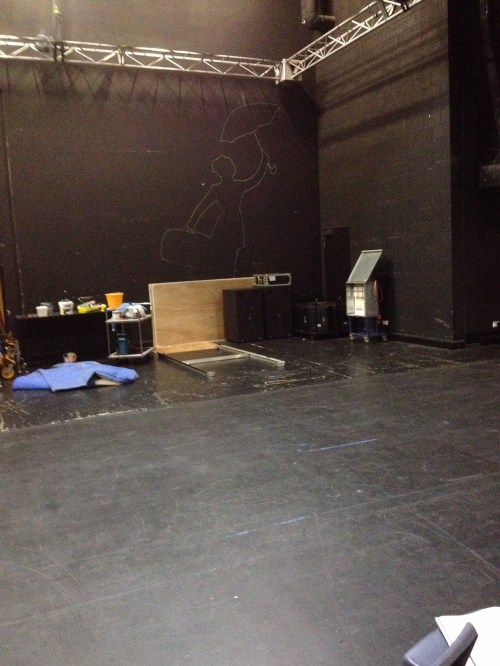
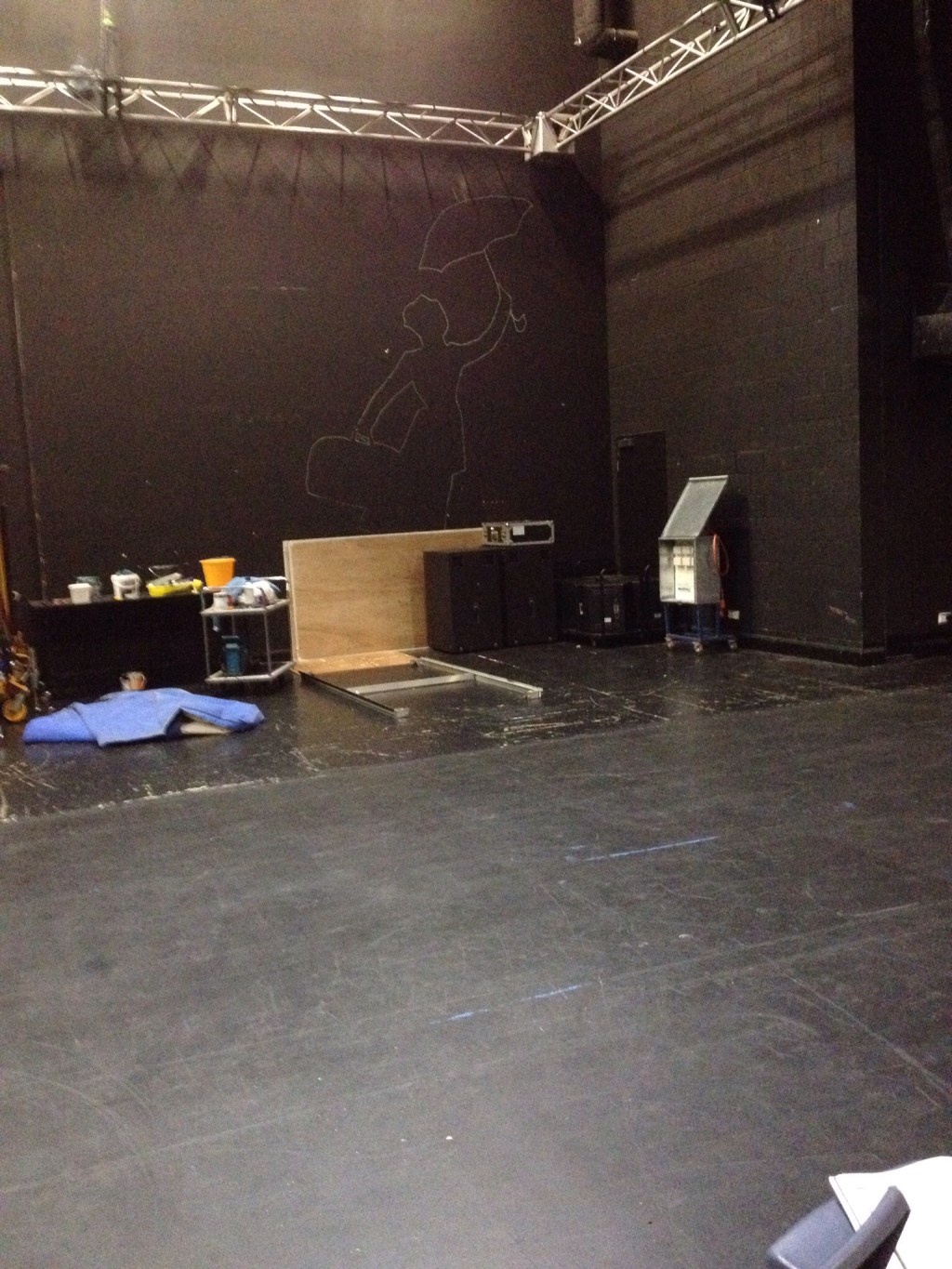
    In the middle of vocal rehearsals, my mind kind of wandered away from what I was supposed to be paying attention to (singing ensemble soprano parts), to something that was drawn on the wall…

    A mysterious visitor on the wall.
    Memories came back about the adventure associated with this image, and what a show it was. Then I started to wonder about what this show had in store for us all…ok, other than the fact the I should be paying attention to what was going on in rehearsal.

    Needless to say, my mind spent a great portion of this rehearsal wondering where was the traditional lucky pineapple (or duck) going to placed in the set during this show, how the heck the dancers are going to sing with all the choreography they have to learn and perform (that’s why we use backstage singers…aka, myself and 8 other talented individuals), and then trying to picture it onstage, which is still a little pre-emotive on my part. 

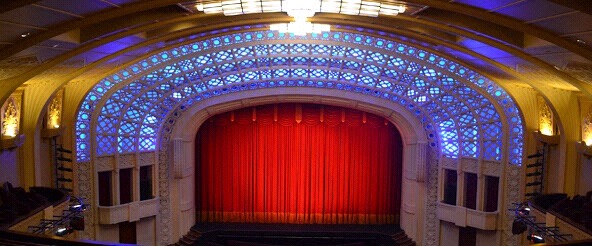
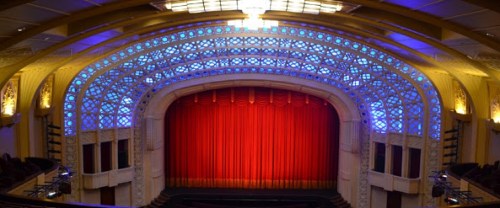
    Then I remember how lucky I am to be in this theatre, with the caliber of people that I work, rehearse and perform with. I remember the history of the Empire Theatre, and the people who have been involved with its operation, past and present. The fact that the theatre is associated with the world renowned actor, Geoffrey Rush, is a real privilege too. not many people can say that they feel truly blessed to be able to be in this theatre and learn the things that I have learned.

    The thing about doing multiple shows, is that one tend to get a little nostalgic, or distracted…or both, especially when caffeine deprived. All these thoughts came to me after staring at a chalk outline on a backstage wall. 

    Oh, the places my mind wanders to…

  • Shakespeare on my mind

    Hear my soul speak: The very instant that I saw you, did my heart fly to your service.- The TempestAct 3, Scene 1.

    I tend to go through fad phases of liking certain movies, music literature. Some of them are fleeting and last a short duration such as playing angry music in the car after a tough day at work. Others are a longer as in years of fandom allegiances to the Lord of the Rings, Hobbit and Star Trek franchises. There are those that come and go such as the old becoming new again. And finally there is those likes that linger in the back of you mind, that come to the forefront when desire needs or asks. I would have to say that Shakespeare is one of these.

    I was considered to be a little strange in school when it came to studying Shakespeare. Whilst my peers usually groaned at the thought of studying plays of the bard, I looked forward to sinking my teeth into these genius works, be it sonnet or play. I remember studying “Much Ado About Nothing” in the 10th grade, reading out the parts in a class of all girls (made interesting reading for the guys parts). I remember studying “Hamlet” in 12th grade, and having to redevelop the “Madness of Ophelia” and her subsequent suicide. I love the language and the imagery that it depicts. 

    Years go on, I found myself coming back to Shakespeare, rereading a few of the plays (mainly the tragedies). When I started university, I found a rather large book containing all the works of Shakespeare in the campus textbook shop. It was on special, for half of its usual price. A great mental debate ensued as to whether I should purchase it with the hundreds of dollars I was about to spend on my university curriculum texts. Needless to say; I did purchase it, and it now sits with my complete collections of Conan Doyle and Jane Austen. I will still often get that big book out to read aloud passages and sonnets.

    Despite many people saying that they don’t like Shakespeare, the English language is riddled with the use of quotes, phrases and sayings in everyday speech (Phrase Finder). Everyone would be familiar with the “To be, or not to be” from Hamlet, or “Where for thou art?” from Romeo and Juliet. We’ve seen the movies that have been popularised into contemporary culture. Baz Luhrman’s “Romeo and Juliet”, “10 Things I Hate About You” (based on “The Taming of the Shrew”) and “Shakespeare in Love” (based loosely on Romeo and Juliet, and “The Twelfth Night”). We shouldn’t leave out the film versions that though are not popular now, were classics of their time, such as Elizabeth Taylor’s “Taming of the Shrew”. 

    Shakespeare even has an everlasting effect on theatre. “The Scottish Play” (Macbeth) has garnered a reputation of superstition in theatres around the world, due to calamities that often befell players, crews and theatres. It was probably due to the violence and sword fights that led to a lot of the incidences. It is considered bad luck to even mutter the name “Macbeth” in a theatre. If it is said, then it needs to be counteracted by saying, “If we shadows have offended, Think but this, and all is mended”, which is quoted from “The Midsummers Night Dream” (Act 5, Scene 1).

    Shakespeare is the ‘go to’ in drama. All the brilliant monologues, soliloquies, and scene work of various topics, contexts and scopes to choose from. Shakespeare gave characters a vibrancy that is sometimes missed in contemporary drama. Most of the good actors have performed in a Shakespeare at sometime in their careers, whether it be in TV, film or theatre. I believe that Shakespearean play is at its best when on the stage, though I’m sure some would contradict me in this opinion.

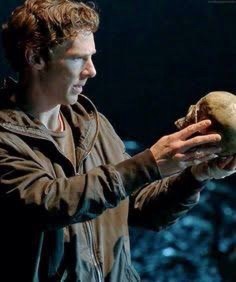
    So what sparked my love of Shakespeare to come from the back of my mind to the forefront? I recently watched National Theatre’s broadcast of “Hamlet”. Benedict Cumberbatch and the rest of cast (and staging crew) should be commended for bringing this play into a contemporary setting, whilst still keeping the original themes and language. For what is Shakespeare, without the language? These imagery used on stage is just brilliant, particularly when transition form scene to scene, and emphasising the speeches (love the ‘slow-mo in the background).

    “Alas! Poor Yoric! I knew him well, Horatio”. Benedict Cumberbatch in Hamlet (2015)

    I would have to say that my favourite Shakespearean tragedy is Hamlet, just because it is a tragedy pretty much from start to finish. I love the monologues that Hamlet has, and the “Woe is me” speech told by Ophelia. 

    “What a piece of work is a man! How noble in reason, how infinite in faculty! In form and moving how express and admirable! In action how like an angel, in apprehension how like a god! The beauty of the world. The paragon of animals. And yet, to me, what is this quintessence of dust? Man delights not me.” – Hamlet; Act 2, Scene 2.

    I also like the comic relief inserted within the seriousness of the play. The lewdness of some comments… Love it. There is also a lot of imagery in the play such as the suicide if Ophelia. You don’t actually see it, but it is described quite beautifully by Queen Gertrude. There is a lot of familiarity in the script of the play, that we use in our everyday language as well. 

    “There are more things in heaven and earth, Horatio, Than are dreamt of in your philosophy”. – Hamlet; Act 1, Scene 5.

    It is often so that my like (dare I say it? Love) for Shakespeare reignites whenever I see a film or theatre production. If only I could see more of them, I would be a very happy girl indeed, but then I do enjoy the classics. 

    …and if anyone is asking. Yes, I am a Cumberbitch (or Cumbercollective; fans keep changing the name).

  • Theatre folk can be a superstitious folk…

    “I regard the theatre as the greatest of all art forms, the most immediate way in which a human being can share with another the sense of what it is to be a human being.” 
    ― Oscar Wilde


    Like so many places that we walk through, theatre has its own set of rules, it’s own etiquette. For the most part, players and audiences members alike understand what it is to be in the theatre. Through my experiences of working in one particular theatre I have learned about why certain things must be, even if it be strange and unusual. I’ve also come across Facebook posts that give detail to the ‘whys’ of superstitions. 

    In short, theatre can be a superstitious place, but with good cause. Theatre can easily become a dangerous place as well. A place of many moving parts that can become disjointed, uncoordinated, and in worse case, break completely. It also applies to the amount of luck, whether a performer performs well, if a show is received well by the audience, or if there is no serious accident or injury to anyone throughout the course of the run. Behind the scenes there ar em any departments working in unison to produce what appear so on the audience. Theatre folk don’t leave anything to chance, for if one department strikes a problem, it can often lead to a cascade effect…to sometimes dire results.

    For curiosities sake, I went searching for superstitions and their reasonings; focusing on superstitions that seem to be in consistent existence across many theatres (including the one at which I am often found). I found an article from Stage-door Productions, highlighting 13 such superstitions. The irony is not lost on me in using the number 13. 


    13: Theatrical Superstitions and Myths


    1. The Scottish Play

    This might be the most actively followed superstition to this date. Even if you don’t personally believe anything bad will go wrong with you saying this name out loud, you should probably refrain from saying it around other theatre artists or you will be forced to go through a series of odd and dizzying counter-curses to send away the bad juju, karma, or energy into the theatre.

    What is the “The Scottish Play” you ask? I hope you’re not in a theatre when you read this. (If you are, run out now) It’s William Shakespeare’s Macbeth. It is believed that mentioning this name or even quoting lines from this show will bring disaster upon you and your production.

    The History: The Scottish Play itself is filled with witches, spells, bad luck, and prophecies, which is believed to be the root of this superstition. Famous performers such as Constantine Stanislavski and Charlton Heston suffered catastrophes during or after a production of Macbeth. It is said that Abe Lincoln read this play the night before his assassination. Today, people associate its utterance to technical malfunctions, actors forgetting lines, props and costumes going missing or breaking, bad box office sales, and a myriad of other horrors.

    How to counteract this curse:  Done in front of the whole cast, the curse bringer must spin around 11 times saying “I am sorry” to Dionysus, the Greek god of the theatre. If not, I’m sure someone will make you do this. Other purifying rituals include leaving and being invited back in, spitting over your shoulder, quoting other Shakespearian quotes such as “If we shadows have offended.” (A Midsummer Night’s Dream)

     2. The Ghost Light

    Rumored to ward of mischievous spirits, the Ghost Light is known today to help guide the first and last person in and out of the theatre. Let’s face it– a dark theatre is a scary and treacherous place. Most of the time the light switches for the backstage, or work, lights is hidden in a maze under a secret garden inside of a wardrobe. This light prevents people from falling into orchestra pits, tripping over cables, and running into set pieces. While it might fend of pesky ghosts from playing tricks on shows, it also helps protect the unlucky few who are rummaging through the dark.

    Unknown fact: In an Equity theatre, the ghost light was the physical alert that you are no longer on the job. Performers love to sit around and talk for hours after a show is done. By putting out the light, the stage manager is signaling that no one is on the clock any more. This is a task still handled by the stage manager most of the time.

    3. The Rule of 3

    Now, the rule of three can have its good connotations: “third time is a charm”, the “comedic rule of three”, and “show me three ways to do that action.” But having three lit candles on stage ignites bad luck.

    The History: Stories say that the person nearest the shortest candle is the next to marry, or the next to die. Candles and flame are still highly mistrusted in the theatre world because before the invention of electricity, theatres were lit by torches when shows were not performed outdoors. Dozens if not hundreds of theatres have burnt down in the history of the theatre; two of the most notable being The Globe Theatre in London and The Brooklyn Theatre in New York City.

    4. Bad Dress=Good Opening

    This dress does not mean the particular outfit that a leading lady is wearing, but the dress rehearsal, or the part of the rehearsal process when costumes are added. It is believed that a bad final dress rehearsal is sign for a good opening performance. Maybe it’s the nerves of the cast and crew before the opening or maybe it’s a curse of every show, but everyone takes the lessons from this final rehearsal and works to fix them for their opening night.

    5. “Break a Leg”- NEVER SAY “Good Luck”

    Thought to be a sign of bad luck, most performers freak out when they are told “good luck”. The results, while maybe only psychological, breed fear and spite from actors.

    The History: “Break a leg” has been attributed to several origins. Some stories say that you are supposed to perform so hard, or sing a note so high in opera, that you break the legs of the stage. The legs being the side curtains on stage today. Other stories say that evil sprites would try to do everything in their power to do the opposite of whatever wish was spoken. So if you wished for good luck, they would make everything go wrong. In Shakespearian days, to “break” meant to “bend”, meaning, taking lots of bows.

    The stories are numerous and range from warding off evil, to wishing positivity, to actually physically hurting yourself from the power of your performance. Whatever you believe, it’s usually “bad luck” to say “good luck.”

    In my circle of theatre folk (professionals, friends and the like), we always say ‘Chookas’ on the eve of performances,  instead of saying ‘break a leg’. According to the UrbanDictionary , this phrase is uniquely used in Australia. Once again, ‘Auslish’ has its own lingo, even in theatre.

    6. Whistle while you work?

    You might have been told to never whistle on or back stage but never knew why. Back in the day, stagehands were out of work sailors. Theatres and ships used a similar amount of ropes. Set pieces and people were raised and lowered in by rope, sand bags, and the strength of some mighty sailors. Before the nifty invention of headsets, whistling was used to cue other men backstage to raise or lower ropes. So if you were onstage and whistled you might face a sand bag to the face.

    7.  Mirror, Mirror…

    We all know of the superstition that breaking a mirror is seven years bad luck. It is believed that breaking a mirror on stage will cause seven years of misfortune for a theatre.  Reflections from mirrors can also be distracting for lights, actors, and audience members. This is always in challenge, especially since A Chorus Line’s famous mirror scene

     8. Green and yellow and blue and….

    Certain colors have been proven to have an affect on our daily lives. Red symbolizes passion or rage, green symbolizes wealth, purple signifies calming and soothing feelings. It is believed that wearing blue garments without silver lining is bad luck.

    The History: Blue dye was difficult to make so fabrics made in blue were highly expensive. Some companies that were failing tried to fool their audiences by filling their stages with actors in blue clothing to give the impression that they were doing well. They would eventually go bankrupt because of the cost. If the costumes were adorned with silver, it was proof to an audience that they could actually afford real silver or had a powerful backer.

    Additionally, yellow was seen as bad luck because it was the symbolic color for Satan in old morality plays during the Middle Ages. As for green- well, when you’re show was outside and you’re wearing green, you might be hard to spot, lost in the trees and bushes.

    9. Giving the Gift: Flowers

    It is an expected tradition in theatre to give flowers to performers, especially on opening night. Once an honor bestowed only on directors and leading performers, it is common practice nowadays to show support and appreciation from family, friends, and fans.

    So when is this bad? It is believed that receiving flowers before a show is as equally bad luck as saying break a leg.

    The History: In order to obtain flowers nice enough for a gift and for a cheap price, they were plucked from graveyards. The superstition comes in when you give performers flowers that are associated with death before a show closes that you were bringing about the death of a show. Flowers were given after the show closed to symbolize the death, or end, of a production.

    10. Fake Props

    There are several props that are considered bad luck to have the real things on stage. It is seen as bad luck to use real money, jewelry, flowers, and even Bibles on stage. Some of these might derive from the fear that real money and jewelry are too luxurious to have onstage, or might be stolen, maybe real live plants will eventually die onstage, or to avoid disrespect for a holy text.

    11. Never wear Peacock feathers on stage?

    It is believed that the eyes on a peacock feather represent The Evil Eye and their manifestation on stage is believed to have caused sets to collapse, theatres to catch fire, and other disasters.

    12. Exit with you best foot foreword

    When exiting a dressing room, it is believed that leading with your left foot is a sign of good fortune. Conversely, it is important for visitors to enter with their right foot forward. The history around this is a little cloudy to my knowledge.

     13. The Last Line

    It has been considered bad luck to say the final line of a show before it opens. In addition, taking bows to an empty house is considered a bad omen. It is a tribute that the show is not complete without the audience.


    To some these superstition may sound frivolous and unnesessary, but theatre is like any other industry where luck, wealth, providence and opportunity can garner fame and glory. Just as the opposite can claim misfortune, injury, and utter (and sometimes literal) destruction.

    …It is better to err on the side of caution, rather than tempt the fates.
     

  • This week has been a little frustrating with me coming down with a flu. It has rendered me without a voice and with a lot of discomfort. Also has resulted in missing rehearsals and canceling music lessons for the week.

    Usually when I feel unwell, I can usually ‘knock it on head’, with 3 levels of care.

    First level – quick fix or at home remedy: When I feel something coming on, it’s is usually a sore throat or sinus. Immediate treatment is a warm salt water gargle (not swallowing the salt water). This is usually to get me to the end of the day, when I can go home, and get to honey and lemon. I usually mix these into an Earl Grey tea, or just have it in warm water. If I have it, I also mix minced ginger in too. This mixture was given the name ‘Gollum Juice’, by actor/director Andy Serkis, when he was playing the voice of Gollum in Lord of the Rings Trilogy, and the Hobbit movies. The character used to reak havoc upon his vocal chords, this mixture was used to soothe his voice after a hard day of gruff speech. I use it sometimes after a day of talking or singing (which is quite frequent working as a school teacher, as well as performer).

    If it’s the end of a busy week, the best thing to do is rest, but this is not always an option with rehearsals. During rehearsals, I would use mints to help keep my throat clear of ‘ick’ (phlegm), and lozenges (Strepsils, Betadines, etc) to soothe the throat.

    Second Level – herbal remedies: at this point I’m not ill enough to be absent from work or rehearsal, but still have abit of discomfort. It’s time to break out the herbal remedies. The best ones that I use are ‘Garlic, Horseradish and vitamin C’ supplements, and echinacea root. Basically, gives the immune system a kick in the butt.

    Third Level – pharmaceuticals: I tend to use these as a last result to stop me from becoming absent. I don’t usually like using them as they also affect the quality of my singing. This is usually in the ‘Cold and Flu’ varieties that you find at the pharmacy.

    The most important aspect that I keep constant through out all aspects of illness is ‘water’. I always keep up with water wherever I go, whether it’s in the classroom, rehearsal room, or just driving. I always have a water bottle with me.

    Obviously, this process doesn’t stop all varieties of illnesses, especially when one is tired, stressed, or the illness is quite nasty. In which case, seeking medical advice is quite important (never seek it through the internet), especially when trying to expedite the time it takes for recovery. This means being patient and actually taking the time to recover, which I find so hard do (I don’t like being idle).

    With rehearsals that I miss, I try to stay in contact with people who I know can tell me what was done, and provided resources to help me catch up.  This means listening and watching to YouTube videos of pieces, looking over sheet music, or reviewing choreography at home. When I do get my voice back, I treat it gently and do vocal exercises to get it back to performing high notes again. Not always immediate, but once again it’s all about the patience. 

    It’s a good thing that I’m naturally pale, I can usually hide illness well, and what I can’t hide I cover with makeup. But in doing this, I also have to know my limitations and accept them. 

  • Costumes, Contexts & Characters.

    “All the world’s a stage, and all the men and women merely players: they have their exits and their entrances; and one man in his time plays many parts, his acts being seven ages.” – William Shakespeare (As You Like It, Act II, Scene VII).

    I thought I might share some experiences about some of the costumes, contexts and characters I’ve been. Some strange, some awkward, and some rather comfortable. Some are designed to blend in, others to stand out.

    You can play a character without a costume, but a costume definitely makes the character. Even when not playing a ‘showcase’ or ‘lead’ role a costume helps develop a character that can be played within the ensemble. I’ve played a peasant/worker in several shows but the costume determines ‘who’ I am, such as a cranky shops person, who is tired of the street urchin who keeps stealing from her basket as she goes from stall to stall, or a high society townsfolk shopping for trinkets.

    I’ve worn some rather awkward costumes, some of which I am still getting comments about (An audience remembers the characters that are the complete opposite of your normal self). A dominatrix themed ‘whore’ in “Miss Saigon” wearing a corset and fishnets, or a ‘showgirl’ rocking a blonde wig in the same show. I’ve even gone so far as to glueing on a beard in costuming as a ‘manager’ in “Phantom of the Opera”.

    There’s the comfortable. The most comfortable of costumes I’ve worn would have to be the nuns habit in “The Sound of Music”. Really helped to get in the mood when chanting Latin, which is pretty much all the nuns chorus does… ok, I got to do some killer high notes too.

    11221636_10153621585904765_3390670088557068098_n
    A ‘Novice’ in “The Sound of Music” – photo courtesy of Mary Quade (Toowoomba Choral Society)

    I should make mention that stage costumes are by the design and creation of many talented people in Wardrobe, Hair and Makeup. They are usually the kindest people that know you so well (Let’s face it, they need to in order to do their jobs), but have stressfully short time allocations to complete the costumes, and then maintain (launder and repair) them throughout the shows run. So if any of these people read this, thankyou so much for your talents.

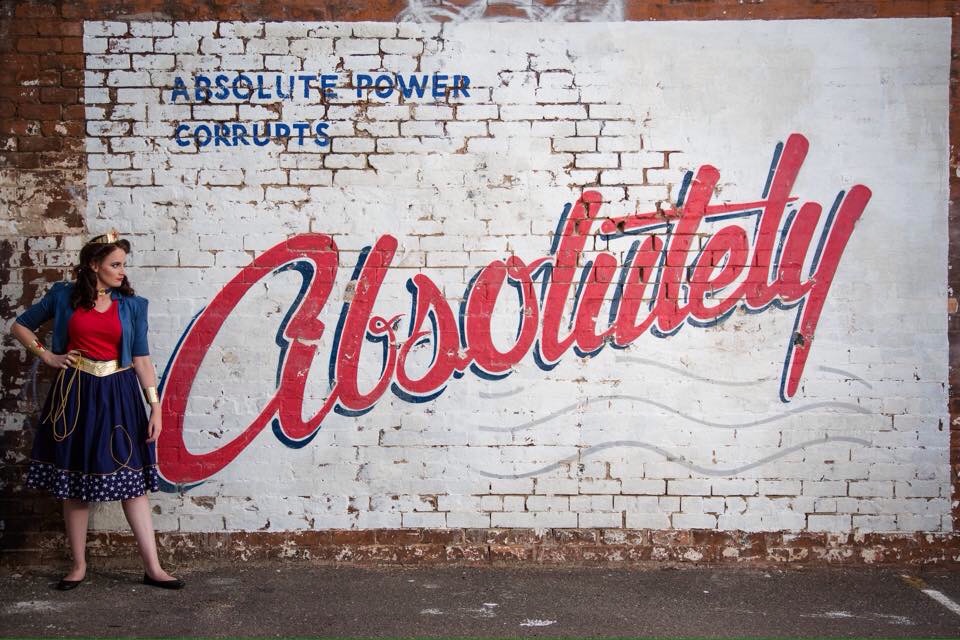
    Then there’s the Cosplaying. That’s are whole different beast, as costumes are of your own choice, and in some cases; own design. I’m a fan of many franchises in pop culture, Star Trek and DC Universe mainly (though Sherlock, Arrow and Gotham are always at the top of my watch list). I’ve attended a few conventions as a Trekkie (OS and TNG) and as ‘Wonder Woman’. The thing about attending these convention is that you adopt the character you cosplay as. It is quite exciting as photographers ask you to pose, families ask you for permission to take pictures, or even visiting celebrities picking you out of a seated crowd, asking you to show some moves (Thank you, Manu Bennett (from ‘Arrow‘ and “The Shannara Chronicles“).

    It is sometimes a challenge to find a character and develop them to a point where you can embody them. I’ve found that ‘talking it out’ to someone helps, creating a back story, finding a context in which the character finds themselves.

    Context searching is really helpful particularly on photo shoots. You’re essentially doing single scene work. By figuring out the context, you can figure out the action or the look it in a photo shoot scenario. In my head, I’m always asking “What would ………… do?”.

    Now, I’m obviously not an award winning expert in this, but this is the process I tend to follow, even when I’m playing an unimportant background character. I find by knowing my character, I’m able to remember my lines and/or lyrics. Script without context tends to get me lost in the oblivion (or at least makes the character a little harder to find).

    Singing is a little different, particularly in a non-stage context. Costuming is not so relevant in these instances, however context is. Most singers would say that it is important to know what you are singing about, otherwise it is difficult to convey the message or emotion to an audience. Musicians (Instrumentalists) would have a similar mantra, particulary when performing as a soloist.

    So I can really sum this article with 3 C’s – Costume, Context and Character.

    …and with a little imagination, have a whole heap of fun performing. One of the perks of being a ‘CrazyMusicChick’.


    Photo courtesy of @pandomimages
     
    #costuming #cosplay #characterisation #theatre #scenework


  • To enter a theatre for a performance is to be inducted into a magical space, to be ushered into the sacred arena of the imagination.” – SIMON CALLOW, (Charles Dickens and the Great Theatre of the World).

    It’s always exciting when beginning a new show. It’s exhilarating when you walk into the “Meet and Greet” and see the many familiar faces of people who are almost your second family. You can feel the love as you approach the troupe and are met with many hugs and shouts.

    You also see the new comers who are not too sure about how the process is going to pan out. You can see the timidness as they move to the group of similar interests. Not worried, they will get the hang of it in due course; all it takes is time, patience and great enthusiasm.

    The production team then calls for us to be seated as they present what is the plan for their respective departments. The management of the theatre and public/media relations give the spiel about good relations and support for the production. The set designer gives a presentation about how the stage could potentially look like come ‘curtain up’, all a working progress of course. Costuming shows us some concept sketches for costumes for main characters, and the staging team (sound, lighting, props, set, etc) gives us an overview of who we need to referring to for certain issues, such a scheduling. Then we get down to Director, Choreography, Music Direction, and Vocal Coach, all of whom we will be working with during rehearsals. A lot of people to get a show off the ground.

    ‘Legally Blonde” performing at Toowoomba Empire Theatre, 15th-24th April 2016

    So after these presentations, we are introduced to the leads (people in main roles). Although most of us would have sussed this out soon after the audition process was completed, a few more passive people still benefit from knowing.  We also get a chance to meet the people that will be part of each core group, such as a backstage singers (like me) and onstage chorus (divided further by dance troupe and general chorus who are mainly onstage singers). And to get things rolling we played some drama games, might seem juvenile to some, but it abit of frivolity is always a lot of fun, especially when people do something unexpectedly funny. Great way to break the ice and get to know everyone.
    Next is ‘The Reading’. An activity that is undertaking by both stage and screen alike, where everyone involved in speaking and/or singing lines gather around a table or sit in a circle, or even find a ‘spot’ on the floor, and read through the script and score. The Director (or stage manager) gives general direction of what characters would be doing on the stage, including entries and exits. A few laughs to be had when the director fills in parts that have yet to be cast, or have people absent. Especially when using voices, accents, or slip of the tongue mistakes. Shows that we’re all human… A director can take a joke is quite reassuring to cast and crew alike. Fun times ahead. 

    ‘The Reading’ also helps the cast develop their characters and think about their interactions with each other. Backstage singers also work out where their talents maybe required, such as the large dance numbers (which usually have a lot of singing intertwined). 

    The first rehearsal begins… All of the chorus and some leads are called to work on the larger numbers. Onstage Chorus and Backstage singers also find out what vocal part they are (soprano, alto, tenor and baritones). Best thing about being a ‘backstager’ is that rehearsals are not as often called for, so time to do additional things (more details about that to come later).

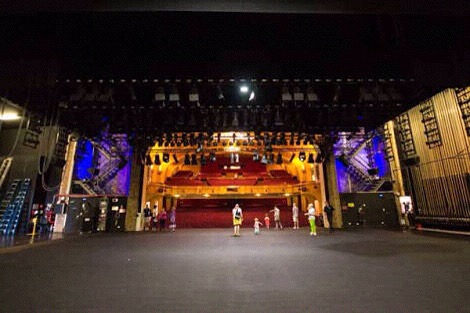
    The final destination…The Stage

    The excitement builds, as the first of the projects for 2016 gets ‘off the ground’. Yes, it does sound quite busy, but for theatre fiends such as myself, it’s almost a lifestyle. 

    And so it begins…the beginnings of a new show, the beginning of the process of getting from the page, to the stage.

  • Hello from CrazyMusicChick

    Hello Everyone.

    This is my first shot at having a blog, so be kind. This blog will focus on my exploits in the musical universe in which I reside. There will be ups and downs, surprises and perhaps a great adventure along the way.

    I suppose it should start with a little of background into myself. I am a singer that performs both as a soloists and in groups. I perform in choirs and musicals in different roles. For those who are musically inclined, I am a soprano (usually a 1st soprano), who is classically trained.

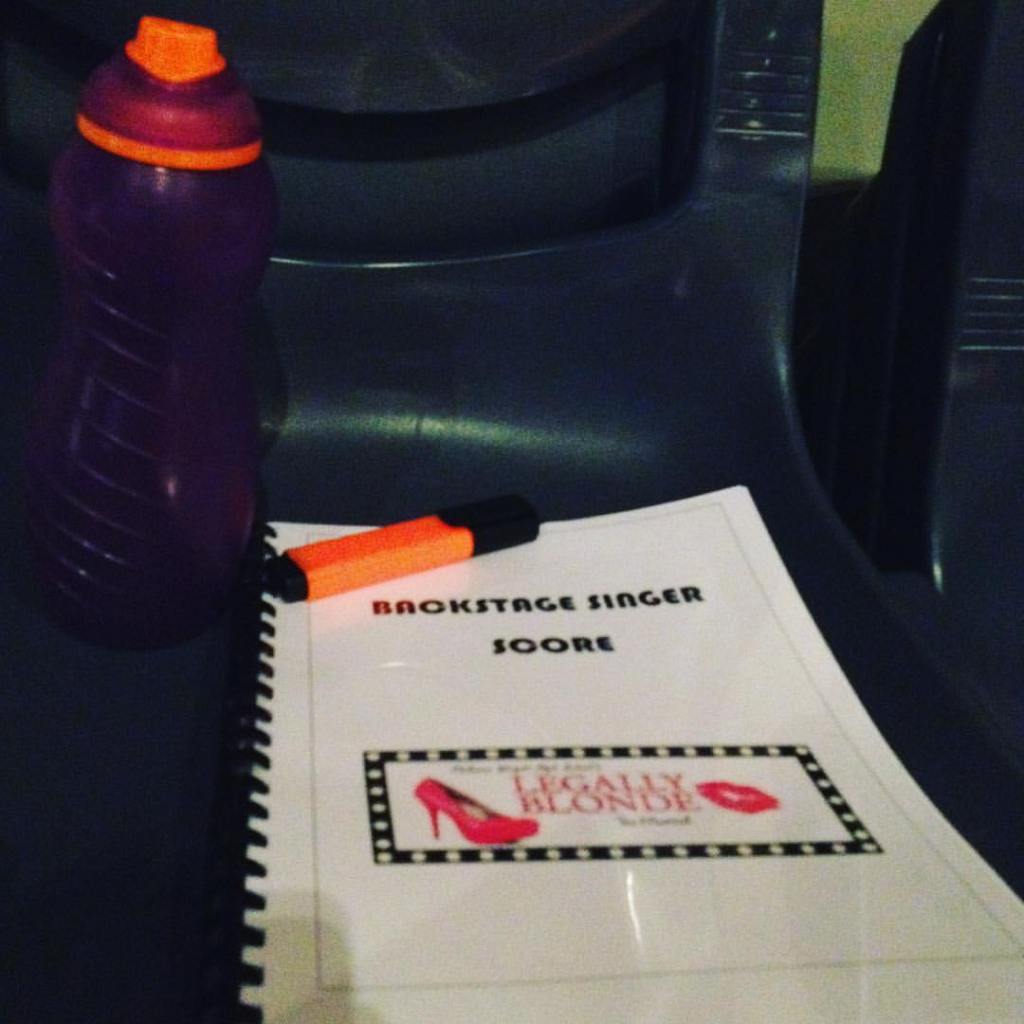
    Musicals that I perform in are the amateur local variety, however the few reviewers that travel to see our shows have listed our productions to be the same (if not better) quality of professional troupes. I am associated with 2 organisations, being the Toowoomba Choral Society (TCS), and the Toowoomba Empire Theatre. Shows that I’ve been onstage chorus include “Les Miserables”, “The King and I”, “Dusty: The Original Pop Diva”, and “The Sound of Music”. I have played small onstage parts in “Miss Saigon”, and “Evita”, and have aided in backstage vocals for “Joseph and his Amazing Technicolor Dream Coat”, “The Phantom of the Opera”, and “Mary Poppins”. I am currently in rehearsal as backstage vocals for “Legally Blonde”, with auditions for “Into the Woods” occurring in the next few weeks”.

    There are 2 choirs that I perform with; being TCS Choir, and Contemporary Choral. Both choirs perform in state competition levels and work at a variety of repertoire. Both choirs also perform various gigs in Brisbane and in Toowoomba.

    As a soloist, I have been singing since primary school, but really ramped it up after graduating high school. I have competed in local eisteddfods. I haven’t done a lot of performance solos outside of competition, but who knows?… I am also signed up on Smule Sing! (www.smule.com/SarahsStar).

    …and no, I don’t get paid for doing any of this (although it would be nice). For now, I’m doing it for the love of it, and bettering the ‘Art’.

    My music tastes are quite eclectic, but I love TV and Movie Soundtracks and soft ballads from artists/groups such as Josh Groban and Celtic Woman.

    This blog is not a place where I will vent frustrations (because that’s just rude), rather a place where I can write about my journey. I don’t know where it will lead, but it will be an adventure nonetheless.

    Until next time…;)