
My blog posts seem to be getting few and far between, but rest assured I’ve been keeping busy. As of late, I have been performing at The Proms.
For a ‘small town’ Australian woman, with no qualification (save experience) in music, to be asked to perform in the festival is a boon. Even more so, since I get the perform there on 3 separate occasions. So this post is about my experiences in each performance, which are unique to each other, as the various pieces that we performed.
So what are/is The Proms?
The BBC Proms is an 8 week classical music festival held predominantly in London. Orchestras, ensembles, bands and choirs perform pieces by composers that are well-known, celebrated or infamous. This festival has been happening annually since 1895. Large performances take place at the Royal Albert Hall (since 1944), and are often broadcasted live over BBC Radio (BBC RADIO 3). A few concerts are also televised on BBC Music channel (BBC4). With the development of social media, a few concerts are placed on YouTube.


Many music lovers (particularly classical) consider this event a ‘must attend’, and is on the bucket list to experience. Performers in orchestras, and singers consider the festival one of the high points of classical music, with performers coming from around the world. Recently the festival, has included a few contemporary acts that include ‘canons’ (my university professor would be proud that I used that word) of jazz etc, in order to showcase the variety of music in the world stage.
So how did I get in, as a performer?
I mentioned in a previous post that I auditioned for the BBC Symphony Chorus and London Symphony Chorus (previous blog). I wasn’t successful for the first, but was successful for the second.
Both choirs are amateur (unpaid) in membership but professional in quality, and as such, when the opportunity came to perform at the Proms…I wasn’t going to miss it. Even more fortunate is that I was given that opportunity 3 times.
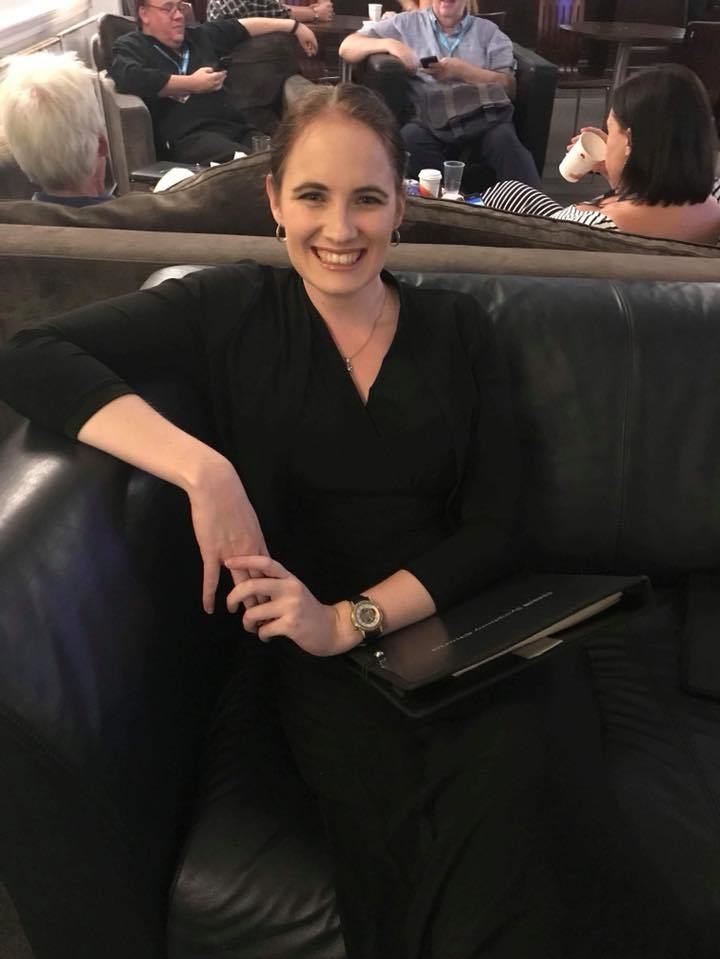
1st Concert – (Prom 11) Mahler’s 8th Symphony ‘Symphony of a Thousand’ (Example: Audio)
- Choirs: London Symphony Chorus, BBC Symphony Chorus, BBC National Chorus of Wales, Southend Boys’ Choir and Southend Girls’ Choir.
- Orchestra: BBC National Orchestra of Wales.
- Soloists: Tamara Wilson, Camilla Nylund, Christine Rice, Joelle Harvey, Claudia Huckle, Simon O’Niell, Quinn Kelsey, Morris Robinson.
- Conducted by Thomas Søndergård.
This was rehearsed and performed in Germanic Latin and German. Though the choir doesn’t sing a lot, what we do sing is quite powerful, especially when there is close to 650 performers on stage. We began rehearsal for this early on, as there are 2 choirs divided into up to 8 parts (so that makes it up to 16 parts), and that’s without the addition of the children’s chorus (which is another 4-6 parts added in).
I was with the London Symphony Chorus as a 2nd Soprano. The first challenge was to get around the language. I did not study European languages at school (I studied Japanese), so thank goodness for the linguistic magics of Norbert Meyn.
The choirs rehearsed at their own rehearsal venues till a few days before the performance, when all choirs united in a single venue. It could have easily have fallen apart, but we persevered with good humour and put it together. It helped that our chorus master for this project, Neil Ferris, also lead the BBC Symphony so at least two choirs were on the same page. The next days was full rehearsal with orchestra and soloists.
So the day of the performance, the Royal Albert Hall…. OMG!!!! when I first arrived in London, I took the tour and got to see the public areas. I thought that it would be awesome to perform here, but likely that I wouldn’t… (little I knew at the time). I was issued a pass during the last rehearsal so I could move in and out of the venue as a performer…meaning that I could go backstage (or underground, in this case). I went out into the hall not as a tourist, or a spectator, but as a performer. I was a little awestruck.


Final rehearsal went off without a hitch, and then they fired up the gigantic Organ. I had never heard it before…talk about the hair prickling effect. The performance was broadcasted live on BBC Radio.
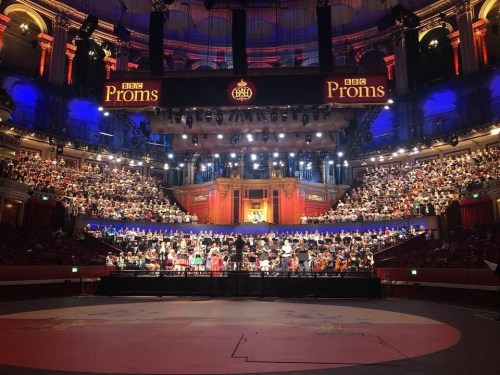
2nd Concert – (Prom 33) Brahm’s ‘A German Requiem’ (Video)
- Choir: BBC Symphony Chorus
- Orchestra: BBC Symphony Orchestra
- Soloists: Golda Schultz, Johan Reuter
- Conducted by Richard Farnes.
So…strange story with this one.
As I said earlier, I auditioned for BBC Symphony Chorus and was unsuccessful. There were justifiable reasons for this, which is fine. It’s how I got better and better prepared for my future auditions. At the time, my sight-reading skills were not up to par, but with practice I have gotten a lot better (it’s almost ninja reflex now).
I got a second chance at this choir, when in January, a call was made to choirs in London looking for singers to join and assist BBC Symphony Chorus for the Brahms Requiem. London Symphony was one of these choirs. A small group of us (some sopranos and a few tenors) went over to the Maida Vale Studios and rehearsed and performed in a studio production. It was awesome being on the radio, and we were invited to perform it again with the BBC at the Proms (may as well, since we already knew it, right?).
So after a break post-January performance, we re-convened at Maida Vale Studios to re-acquaint ourselves with the text. Norbert was called back in to make sure we were strong enough in our German. Neil was also our chorus master for this project (being the principal Chorus Master for the BBC Symphony Chorus).
This piece is a vocal work-out for choirs, standing and singing for over 65 minutes. Even though soloists are integrated into the piece, the choir is the centrepiece. You could almost develop toned abs just by the use of breath and muscle control. I was definitely a little sore and really exhausted after the performance, but due to adrenaline we did it twice in one day (one rehearsal, one performance). I was singing 1st soprano for this (which separated me from most of the other LSC members, as they were singing 2nd soprano). I didn’t mind singing under the BBC Symphony banner. It’s all for the experience, right?
Another new factor to add to the rush, was the fact that at the time of performance, London was experiencing a heat wave. The city is not built for heat….and we felt that onstage. It was gracious for organisers of the concert to allow us to have a quick slug of water onstage during the performance. If we didn’t lose weight from the singing, we did so with the heat (I should be used to it, being Australian. But even I was feeling the effects).
This performance was recorded and broadcasted online and on TV, so I made my debut on the BBC television, as a performer…YAY!!! It was also broadcasted live on BBC radio.
- Choir: London Symphony Chorus
- Orchestra: London Symphony Orchestra
- Soloists: Magdalena Kozena, Patricia Bardon, David Shipley, Anna Stephany, Gavan Ring, Sunnyboy Dladla, Jane Archibald, Elizabeth Watts
- Conducted by Sir Simon Rattle.
Preparation for this, began before Brahms performance, we were required for a weekend of intensive learning of this piece, mainly because of commitments of choristers and the chorus master… we needed to be at least be familiar with the piece when we came back to it after a month. We were (at the time) involved with Mahler 8, and for some…with Brahms. So a weekend of French and timing…and a little socialisation (why not?…). We wanted to be on top game when we came back to it.
Straight after the Brahms, I was back in rehearsal for the next Proms undertaking, Ravel’s “L’enfant et les sortilèges”. What a strange piece for a choir. It makes sense when soloists are added in, but I was a little ‘weirded out’ by all the onomatopoeia. We took on a few strange characters, such as irritated children learning arithmetic, or animals in the forest (I think I was a cricket). The piece has a beautiful choral part at the end…so we get the final spotlight…heh, heh.
I returned to London Symphony normality with Simon Halsey as our chorus director leading the way. We had a lot of help with Mathew Hamilton and Benjamin Goodson. We also had the linguistic geniuses of Anita Morrison, Rebecca Outram and Robert Rice, for this project. We song it in French, which meant I had to get my tongue, teeth and lips around a different language.
We also returned to our beloved orchestra, the London Symphony Orchestra (fresh from their tour). We always have interesting conversations and comments from members of the orchestra (more so from the percussionists, because they’re close to us). I like that they don’t make us feel isolated, and that we’re a team under the same London Symphony banner. Its harder to communicate with other members but its a starting point (I followed a few of them on Twitter).
We also returned to the baton of Sir Simon Rattle. I love Rattle, in that he is so ‘down to earth’, and takes everything in his stride with good humour and patience, despite the mistakes that we make (we are an amateur chorus, that strife for professional quality). My debut performance with London Symphony Chorus was actually conducted by Rattle, so I feel that I’ve come a full circle considering that I have to leave at the end of the year (I won’t get the opportunity to perform with Rattle again). It feels like a closure.


OK. Back to the performance. We needed to sit and watch during the first half. We weren’t required till the second half….then there was this almighty sneeze!!!! Mother of all that is holy!!! The orchestra kept going despite the audience making a snigger and grumble. Good on them!
After interval, it came to our part, and I think we sounded ok….at least by the radio broadcast. This performance was also be broadcasted on TV…and I hope…will make it to YouTube, so my friends/family can see it.
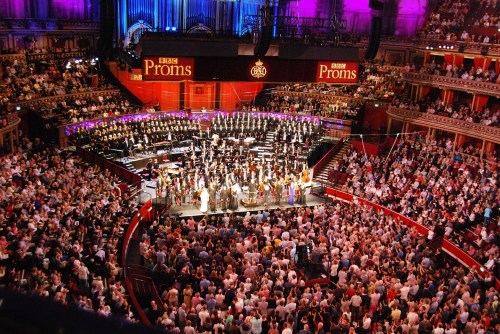
So I looking back…
All 3 performances were brilliant in my eyes. I stepped into the amazing red hall in front of people that love the music and are willing and listening. I don’t tend to read reviews of performance (though there are plenty of them that record the good and the bad), in the end, it is the personal achievement and experience of it all that I feel that is important to a performer. I think this for choristers, soloists and instrumentalists. I might be seemingly naïve, but as an Australian from an obscure city, with little official qualification (aside from experience)…to get here…I’m extremely proud of myself, and grateful to those who gave me the opportunity.
I have ticked another item off my bucket list…performing at the Royal Albert Hall. I kept programs as evidence. I never know… maybe in my ‘grey days’, I can say that I performed at the Royal Albert hall, with world-class choirs and orchestras, and world-class people.
The bonus is that I got to do it 3 times. I am hoping that when I return to London in (hopefullly) 3 years, that I will be able to continue to perform in these glorious venues, with the brilliant people who I get to meet and befriend. I am very sorry to have to leave them, but I take away with me their friendships and experiences. I hope that makes me a better person, performer and singer.
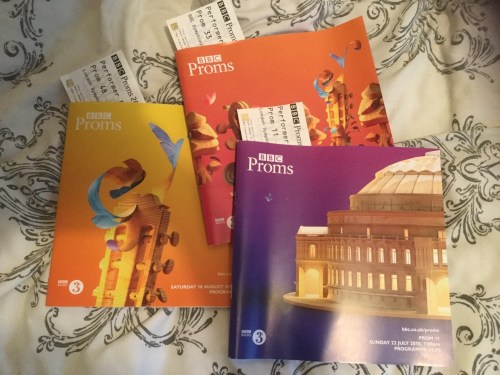
Until next time intrepid readers…


 Sarah Talbot
Leave a comment